
Views: 0 Author: Site Editor Publish Time: 2026-11-10 Origin: Site


TENS electrode pads are conductive accessories that transfer electrical pulses from a TENS device to the skin. They support transcutaneous electrical nerve stimulation, a technique used for managing certain types of pain.
Their performance depends on the conductive material, contact surface, electrode size, and connection system.

TENS stands for Transcutaneous Electrical Nerve Stimulation.
A TENS system delivers controlled electrical pulses through electrodes placed on the skin.
The electrodes provide the electrical interface between the stimulation device and the body.
According to the NHS explanation of TENS, this technique may provide temporary pain relief for some users, although it does not work for everyone.
A TENS electrode may include:
Conductive electrode material
Skin-contact layer or conductive medium
Supporting backing material
Electrical connector
Attached lead wire, depending on the design
The exact construction varies across disposable and reusable electrode systems.
TENS electrode pads may incorporate conductive silicone, carbon-based materials, hydrogel, or conductive fabrics.
Jinke Rubber manufactures Silicone Electrode Pads for compatible electrotherapy equipment.
Material design affects flexibility, electrical contact, and maintenance requirements.
TENS electrode pads form part of a controlled electrical stimulation circuit.
The stimulation device produces electrical pulses according to its programmed settings.
Pulse frequency, duration, and intensity vary by device and intended application.
In wired systems, electrical pulses travel through lead wires to the electrodes.
Reliable connections are essential for consistent device operation.
Jinke Rubber's Conductive Leads category covers related connecting components.
The electrodes transfer current through the intended skin-contact interface.
A conductive medium may be necessary, depending on electrode construction.
Poor contact can cause uneven stimulation or discomfort.
Electrical stimulation activates peripheral nerve fibers and may modify pain signaling.
The mechanisms depend on stimulation parameters and the user's response.
A clinical overview from the National Library of Medicine discusses the mechanisms and clinical considerations associated with TENS.
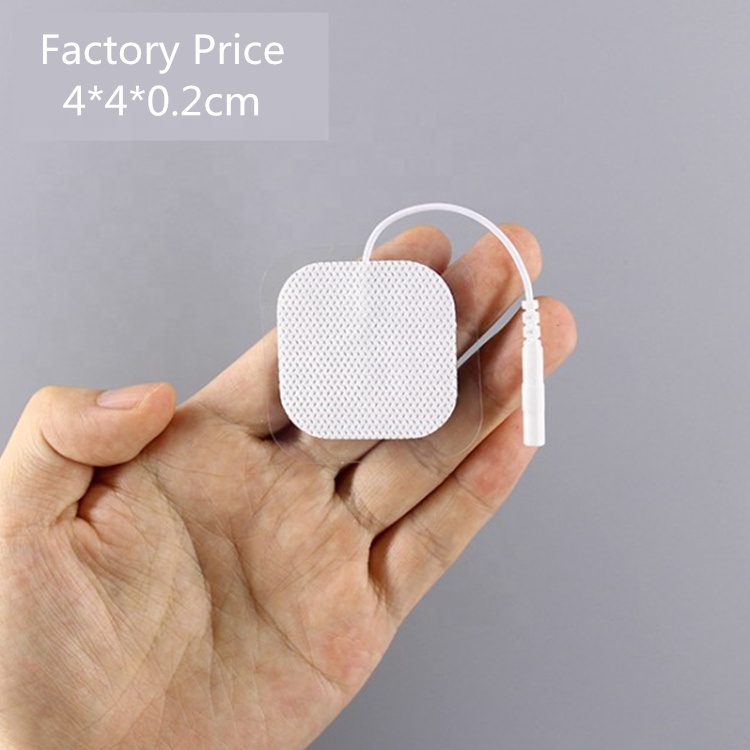
Different electrode designs serve different equipment requirements.
Electrode Type | Typical Construction | Key Consideration |
|---|---|---|
Hydrogel electrode | Conductive gel with supporting backing | Adhesion and gel condition |
Conductive silicone electrode | Flexible conductive rubber | Conductive medium and contact design |
Fabric backing with conductive layer | Skin contact and replacement | |
Snap connector electrode | Electrode with snap connection | Snap dimensions and compatibility |
Pre-wired electrode | Electrode with attached lead | Cable and connector specification |
Hydrogel electrodes commonly use a conductive adhesive layer.
This layer helps establish electrical contact and can provide adhesion to the skin.
Their usable life depends on gel properties, handling, and storage conditions.
Conductive silicone electrodes use electrically conductive elastomer formulations.
They may provide reusable structures for compatible electrotherapy applications.
Some designs require a separate conductive medium to achieve the intended skin contact.
Non-woven electrode pads incorporate flexible fabric backing materials.
Jinke Rubber offers Non-woven Electrode Pads, including configurations with attached lead wires.
These products suit equipment designs that specify the corresponding contact system.
TENS electrode geometry influences the electrical contact area.
Current density is related to the amount of current distributed across the effective contact area.
Smaller contact areas may create higher local current density under otherwise comparable conditions.
However, actual distribution depends on skin contact, electrode construction, and device settings.
Round electrodes provide a compact contact configuration.
Oval electrodes may suit elongated contact regions or different product layouts.
These shapes should be evaluated against the device's intended application.
Equipment manufacturers may require specific dimensions and tolerances.
Jinke Rubber supplies Snap Button Conductive Silicone Electrode Pads and other configurations for compatible devices.
Poor contact can affect stimulation consistency and comfort.
Hydrogel may lose moisture, become contaminated, or lose adhesion.
These changes can reduce effective skin contact.
Wrinkles, lifted edges, or uneven placement can decrease contact quality.
Loose connectors or damaged cables may interrupt the electrical path.
Oil, dirt, or inappropriate cleaning agents can affect electrode performance.
Users should follow the specific instructions provided with the approved device and electrodes.
Reusability depends on the electrode construction and validated usage conditions.
A reusable electrode must retain suitable electrical and mechanical performance during the intended number of uses.
Cleaning procedures depend on the electrode type.
Conductive silicone pads and self-adhesive hydrogel pads may require different maintenance.
Electrodes should be replaced when their contact performance, physical condition, or compatibility no longer meets the specified requirements.
Research and clinical guidance summarized in StatPearls on TENS emphasize appropriate equipment use and electrode condition.
TENS electrode selection is part of overall device development.
Manufacturers should evaluate resistance, electrode configuration, and stimulation parameters.
Pin size, snap configuration, wire construction, and connector retention should be specified.
Body-contact materials must undergo suitable biological safety evaluation.
The ISO 10993-1 standard provides relevant principles for biological evaluation within a medical-device risk management process.
Electrode shape, thickness, material formulation, and assembly requirements may vary.
Jinke Rubber offers custom silicone rubber electrode components for different equipment designs.
TENS electrode pads may use hydrogel, conductive silicone, carbon materials, or conductive fabrics.
No. Reusability depends on the product design and instructions.
Some designs incorporate conductive adhesive. Others require a separate conductive medium.
Not automatically. Compatibility depends on the specific device and electrode design.
TENS electrode pads provide the conductive interface between stimulation equipment and the skin. Their design affects contact reliability, flexibility, and device integration.
Jinke Rubber manufactures conductive silicone electrode pads and related components for compatible electrotherapy equipment. Its OEM/ODM services support customized electrode dimensions, materials, and connection requirements.


