
Views: 0 Author: Site Editor Publish Time: 2026-11-10 Origin: Site


TENS and EMS electrode pads both transfer electrical pulses from stimulation devices to the skin. Their main differences relate to the intended stimulation purpose, device settings, and electrode requirements.
TENS primarily targets sensory nerves for pain management. EMS aims to stimulate motor nerves and produce muscle contractions.
Although some electrode designs support both applications, compatibility must be verified.
Table of Contents
TENS stands for Transcutaneous Electrical Nerve Stimulation.
EMS stands for Electrical Muscle Stimulation.
Both technologies use electrical stimulation, but they serve different purposes.
TENS electrode pads are used with compatible transcutaneous nerve stimulation devices.
They provide an electrical interface between the device and the skin.
According to the NHS TENS guidance, TENS may temporarily relieve certain types of pain, although effectiveness varies.
EMS electrode pads are used with electrical muscle stimulation systems.
Their primary purpose is to transfer electrical pulses that activate motor nerves and produce muscle contractions.
The FDA's explanation of electrical muscle stimulators describes applications in physical therapy and rehabilitation.
Yes. Some TENS and EMS systems use electrodes with similar conductive materials and connection structures.
However, the same appearance does not guarantee compatibility.
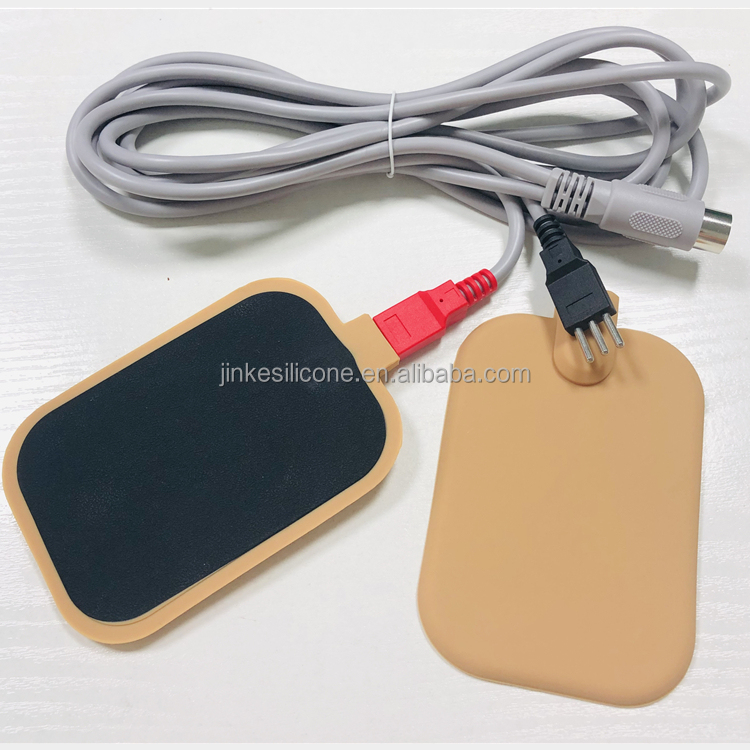
Jinke Rubber's Silicone Electrode Pads category includes products intended for compatible TENS and EMS equipment.
The main comparison concerns the device application and resulting electrode requirements.
Feature | TENS Electrode Pads | EMS Electrode Pads |
|---|---|---|
Primary purpose | Support nerve stimulation for pain management | Support electrical muscle stimulation |
Main stimulation target | Primarily sensory nerves | Primarily motor nerves |
Typical response | Tingling or altered pain perception | Muscle contractions |
Common applications | Pain management and electrotherapy | Rehabilitation and muscle stimulation |
Electrode materials | Hydrogel, conductive silicone, other conductive materials | Hydrogel, conductive silicone, other conductive materials |
Available shapes | Round, square, rectangular, oval | Round, rectangular, oval, custom |
Connector types | Device-dependent | Device-dependent |
Compatibility | Must match TENS device specifications | Must match EMS device specifications |
TENS focuses primarily on modulating pain-related nerve signals.
EMS focuses on producing controlled muscular responses.
The distinction concerns the intended device function rather than a completely different electrode material.
Stimulation devices may operate with different pulse parameters and electrical outputs.
Electrode dimensions, contact behavior, and materials must suit the intended operating conditions.
Placement depends on the clinical or device application.
TENS placement usually relates to the pain-management approach.
EMS placement relates to the intended muscle stimulation.
Users should follow qualified professional guidance and the device manufacturer's instructions.
Both systems may use similar conductive materials.
Conductive silicone offers a flexible electrical contact material.
It may be used in reusable electrode systems.
Jinke Rubber supplies Conductive Silicone Electrodes for different equipment configurations.
Hydrogel provides an electrically conductive skin-contact medium.
Non-woven materials can provide flexible electrode backing.
Jinke Rubber's Non-woven Electrode Pads include pre-wired configurations for compatible stimulation devices.

Carbon-based fillers can make silicone rubber electrically conductive.
The final material's resistance depends on its formulation and processing.
A detailed explanation is available in our Conductive Rubber vs Conductive Silicone comparison.
Electrode geometry influences contact area and current distribution.
TENS systems may use different electrode sizes depending on the device and intended treatment area.
Smaller pads can provide a compact contact surface.
Larger pads distribute current across a greater effective area under comparable conditions.
EMS electrode designs may need to accommodate different muscle regions or equipment layouts.
Electrode shape can affect placement and contact coverage.
Size does not independently determine electrode suitability.
Effective electrical contact, skin condition, conductive medium, and device output also matter.
The National Library of Medicine's TENS overview discusses the importance of electrode placement and stimulation parameters.
Some electrodes may work with both systems.
However, interchangeability cannot be assumed.
Devices may use snap connectors, pin connectors, or specialized cable interfaces.
The connector must match the equipment.
Electrode resistance, contact area, and current-handling behavior must match the device's requirements.
The intended electrode contact medium and maintenance procedure must also be suitable.
For example, a reusable conductive silicone electrode may require a different contact method from a self-adhesive hydrogel pad.
Jinke Rubber offers Snap Button Conductive Silicone Electrode Pads for compatible equipment designs.
The products are used in different areas of electrical stimulation.
TENS electrodes are used in devices intended to support certain pain-management applications.
Clinical suitability depends on the person, condition, and device instructions.
EMS systems may be used in rehabilitation programs for specific muscle-related applications.
These uses require suitable professional oversight.
EMS electrodes may also support compatible muscle stimulation systems.
However, manufacturers should avoid unsupported claims about body shaping or weight loss.
The FDA states that the regulatory status and supported intended uses of electrical muscle stimulators must be considered carefully.
Custom conductive electrode structures can support wearable device development.
Such designs may require special shapes, flexible materials, and reliable connections.
Electrode design should begin with the equipment's intended function and electrical requirements.
Manufacturers should define the conductive material, resistance requirements, and acceptable tolerances.
Electrode geometry and connector configuration should match the equipment.
Materials must be evaluated for their intended duration and type of body contact.
The ISO 10993-1 biological evaluation standard provides a relevant framework for medical-device material safety.
OEM projects may require custom molds, electrode shapes, conductive materials, or integrated connections.
Jinke Rubber supplies custom conductive silicone rubber products for application-specific equipment requirements.
They may share materials and designs, but compatibility depends on the specific device.
Only when the electrode meets the EMS device manufacturer's specifications.
Some designs require gel, while others use integrated conductive contact layers.
Certain designs are, but electrical and mechanical compatibility must be verified.
TENS and EMS electrode pads can share similar materials, but they support different stimulation purposes. Their suitability depends on device compatibility, contact properties, and electrical performance.
Jinke Rubber manufactures silicone electrode pads and related components for compatible TENS and EMS devices. Its OEM/ODM capabilities support custom sizes, conductive materials, and connection designs.


