
Views: 0 Author: Site Editor Publish Time: 2026-10-15 Origin: Site


Specifying the wrong conductive elastomer for an electronic enclosure carries massive risks. A single material failure results in EMI/RFI leakage, environmental ingress, or severe galvanic corrosion. These failures lead directly to catastrophic system downtime. Engineering and procurement teams face a strict balancing act. You must meet precise electrical attenuation requirements while ensuring environmental survivability against temperature extremes, chemicals, and pressure. Over-engineering drives up manufacturing complexity, while under-engineering guarantees field failures.
The choice between different elastomer bases hinges on your specific operational environment. You must evaluate compression requirements, chemical exposure risks, and procurement logistics. This guide breaks down the technical evaluation criteria for both material categories. We map out exactly how these materials perform under stress. By understanding the mechanical and chemical limitations of each option, you can design enclosures that maintain robust shielding effectiveness throughout their intended lifecycle.
Temperature vs. Chemical Resistance: Conductive silicone dominates in extreme temperature fluctuations (-55°C to +200°C), while specific conductive rubbers (like EPDM or Nitrile) are required for environments exposed to harsh chemicals, fuels, or petroleum-based oils.
Galvanic Compatibility: Both base materials rely on conductive fillers (silver, nickel, aluminum, carbon); the choice of filler, paired with the correct base elastomer, dictates long-term corrosion resistance against the enclosure substrate.
Compression Set & Longevity: Conductive silicone generally offers superior long-term compression set recovery and a significantly longer shelf life compared to standard conductive rubber, making it preferable for enclosures requiring frequent opening and closing.
Cost-to-Performance Ratio: Standard conductive rubber is often more cost-effective for general-purpose, high-volume applications, whereas silicone (and specialty variants like fluorosilicone) commands a premium for specialized aerospace, medical, or military applications.
Table of Contents
Conductive elastomers are flexible polymer materials containing electrically conductive fillers such as carbon, nickel-coated graphite, or silver-coated particles. These fillers create conductive pathways within the elastomer, enabling applications such as electrical contact, grounding, and electromagnetic interference (EMI) shielding.
Conductive elastomers work through interconnected conductive particles distributed throughout a rubber or silicone matrix. When sufficient conductive pathways form, electrical current can pass through the material.
In EMI shielding applications, conductive elastomer gaskets help maintain electrical continuity between enclosure surfaces while providing a physical seal. Performance depends on filler concentration, particle distribution, compression, and material formulation.

The base polymer influences temperature resistance, chemical compatibility, flexibility, compression set, and mechanical durability. Conductive fillers primarily influence electrical performance, although filler type and loading also affect the material's mechanical properties.
Choosing between conductive rubber and conductive silicone therefore requires evaluating both electrical requirements and environmental conditions.
Explore our Conductive Silicone Rubber Rolls for related conductive elastomer materials and applications.
Conductive silicone rubber combines the flexibility and environmental resistance of silicone with conductive fillers. It is widely considered for electronic components, conductive interfaces, and specialized shielding applications.
Conductive silicone generally offers excellent temperature stability, UV resistance, ozone resistance, and long-term flexibility. Many silicone formulations also provide favorable compression set performance, helping components maintain contact or sealing pressure during repeated use.
Depending on the formulation, conductive silicone can be manufactured into molded parts, sheets, and custom profiles.
Standard silicone formulations may swell or deteriorate when exposed to certain petroleum oils, fuels, and organic solvents. Silicone can also have lower abrasion and tear resistance than some organic rubber compounds.
For aerospace or sensitive electronic applications, low-outgassing grades may be required. Chemical resistance, mechanical strength, and outgassing performance should be verified through product-specific testing.
Conductive silicone materials are commonly considered for:
Electronic contacts and flexible conductive components.
EMI shielding gaskets and electronic enclosures.
Outdoor communication equipment requiring weather resistance.
Medical-device components where the specific formulation meets applicable safety requirements.
For related electrode applications, explore our Conductive Silicone Electrodes.
Conductive rubber commonly refers to organic elastomers such as NBR, EPDM, or neoprene combined with conductive fillers. Different rubber types offer distinct advantages in chemical resistance, mechanical strength, and environmental durability.
Conductive organic rubber compounds can provide good mechanical toughness, abrasion resistance, and application-specific chemical compatibility.
Nitrile rubber (NBR) is commonly selected for petroleum oil resistance, while EPDM offers strong resistance to many water-based fluids, ozone, and weather exposure. Neoprene provides a balance of mechanical durability and resistance to selected environmental conditions.
Compared with many silicone formulations, certain organic rubbers have narrower operating temperature ranges.
NBR may experience degradation under prolonged UV and ozone exposure, while other formulations may lose flexibility or develop compression set under unsuitable temperatures.
Actual performance depends on the polymer grade, conductive filler, curing system, and operating environment.
Conductive rubber materials may be suitable for:
Industrial equipment exposed to oils or abrasion.
Automotive electrical and sealing components.
Machinery enclosures requiring flexible conductive contacts.
Specialized EMI shielding applications with defined chemical exposure requirements.
Evaluation Factor | Conductive Silicone | Conductive Organic Rubber |
|---|---|---|
Temperature Resistance | Generally broader range | Depends on NBR, EPDM, or neoprene |
UV and Ozone Resistance | Generally excellent | Varies by polymer |
Oil Resistance | Limited for many standard grades | NBR often performs well |
Flexibility | Good across a broad temperature range | Depends on formulation |
Abrasion Resistance | May require specialized grades | Some compounds offer advantages |
Compression Set | Often favorable | Formulation-dependent |
Manufacturing | Molded parts, sheets, profiles | Molded parts, sheets, gaskets |
Typical Applications | Electronic contacts, shielding, conductive components | Industrial sealing, automotive and machinery components |
Key consideration: Neither material is universally superior. The appropriate choice depends on required conductivity, operating temperature, chemical exposure, mechanical loads, and manufacturing requirements.
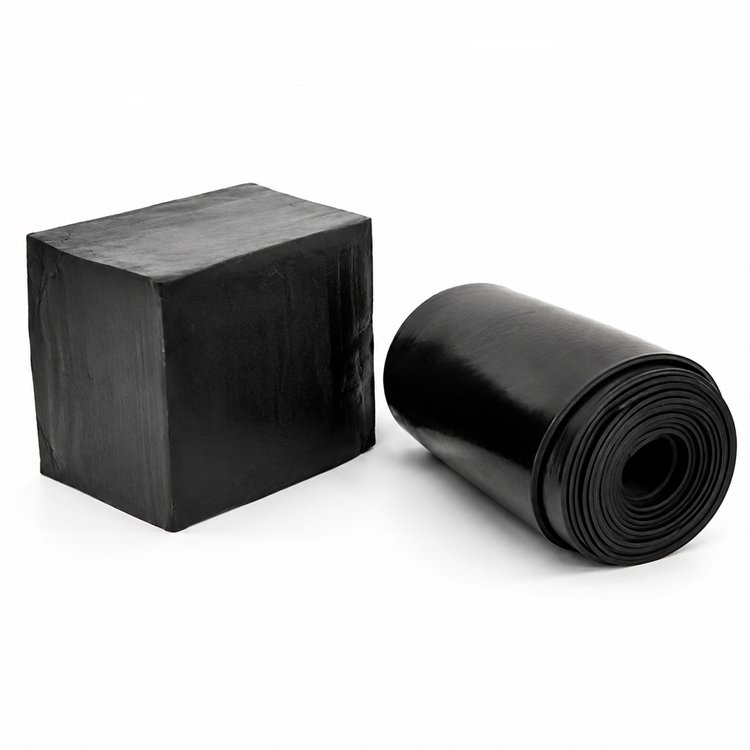
Choosing between conductive rubber and conductive silicone requires evaluating environmental resistance, electrical performance, mechanical properties, manufacturing flexibility, and regulatory requirements. The optimal material depends on the base polymer, conductive filler, and intended application.
Conductive silicone generally offers excellent temperature stability, UV resistance, and flexibility, making it suitable for electronics and outdoor applications. Conductive nitrile rubber (NBR) is often preferred for petroleum oil exposure, while EPDM performs well in many water- and weather-resistant applications. Fluorosilicone (FVMQ) combines silicone-like temperature performance with improved resistance to certain fuels and oils.
Material | Main Strength | Typical Applications |
|---|---|---|
Conductive Silicone | Temperature and UV resistance | Electronic enclosures, conductive components |
Conductive Nitrile (NBR) | Petroleum oil resistance | Industrial sealing components |
Conductive EPDM | Water and weather resistance | Outdoor sealing systems |
Conductive Fluorosilicone | Fuel resistance and temperature stability | Aerospace and specialized equipment |
Actual chemical compatibility depends on material formulation, exposure conditions, and the conductive filler.
Galvanic corrosion can occur when conductive fillers contact dissimilar enclosure metals in the presence of moisture. Engineers should evaluate filler composition, housing materials, surface treatments, and operating conditions to reduce corrosion risks.
For EMI shielding gaskets, filler selection should consider both electrical conductivity and compatibility with the enclosure substrate. Corrosion performance should be verified through application-specific testing rather than relying on a universal filler recommendation.
Compression set and hardness affect the long-term sealing performance of conductive elastomers. Conductive silicone often provides good flexibility and compression recovery, while specialized organic rubber formulations may offer advantages in abrasion or oil resistance.
Material selection should consider Shore A hardness, compression force, tensile strength, and long-term operating conditions.
Explore our Conductive Silicone Electrodes for related conductive elastomer applications.
Conductive rubber and silicone materials can be manufactured into molded components, gaskets, sheets, and custom profiles, depending on their formulations.
Conductive silicone is commonly used in precision-molded parts and certain extruded or dispensed sealing applications. Customization options may include dimensions, hardness, filler composition, and electrical resistance.
For related applications, explore our Silicone Electrode Pads.
Conductive elastomer shelf life depends on polymer chemistry, curing system, packaging, and storage conditions. Silicone and organic rubber materials may have different aging characteristics, but shelf life should be confirmed through manufacturer documentation.
Buyers should consider storage temperature, humidity, packaging integrity, and material traceability when planning long-term inventory.
Conductive silicone and rubber materials may need to meet different standards depending on the final application.
Standard / Regulation | Main Consideration |
|---|---|
MIL-DTL-83528 | Performance requirements for specified conductive elastomeric EMI shielding gaskets |
RoHS | Restrictions on certain hazardous substances |
REACH | Applicable chemical substance compliance requirements |
UL 94 | Flammability classification of tested materials |
ISO 10993 | Biological evaluation for applicable medical-device materials |
Compliance depends on the specific material formulation and tested product. Buyers should request relevant test reports rather than assuming all conductive silicone or rubber products meet these requirements.
Calculate your required shielding effectiveness (dB) and identify the necessary conductive filler based on your target frequency ranges.
Map the galvanic potential between your chosen filler and your enclosure substrate using a standard anodic index to assess corrosion risk.
Define the maximum temperature extremes and list all potential chemical exposures in the operating environment to select the correct base polymer.
Determine your available closure force to select the appropriate material durometer, profile shape, and compression limits.
Request material samples and conduct accelerated environmental testing before finalizing your enclosure design.
A: Generally, no. Standard silicone swells and degrades rapidly when exposed to automotive oils, fuels, and lubricants. You should specify organic compounds like Nitrile or EPDM for automotive fluid resistance.
A: Silicone offers a significantly longer shelf life, often exceeding 10 years. Organic compounds typically expire within 3 to 5 years and require stricter climate-controlled storage to prevent premature aging.
A: Match the conductive filler to your enclosure metal. Use nickel-aluminum fillers for aluminum housings instead of pure silver. Alternatively, use a dual-elastomer design to keep moisture away from the conductive interface.
A: Silicone is the industry standard for FIP applications. Its low uncured viscosity allows automated machines to dispense precise, complex bead profiles directly onto small circuit board housings.
A: Over-compression crushes the conductive particles and damages the polymer matrix. This permanently ruins the environmental seal and significantly reduces the material's electromagnetic shielding effectiveness.
A: Specify fluorosilicone when your application demands both the extreme temperature resistance of silicone and the harsh chemical or jet fuel resistance of organic polymers, commonly required in aerospace environments.


