
Views: 0 Author: Site Editor Publish Time: 2026-10-15 Origin: Site


Selecting the right diagnostic supplies directly impacts clinical outcomes and facility operations. Improper selection accounts for a significant percentage of monitoring errors. Recent 2024 data indicates up to 32% of artifact-related issues stem from poor selection. These failures lead to misdiagnoses, repeated tests, and wasted clinical time. Procurement teams constantly face a core problem. They must balance standardizing inventory to reduce expenses against providing specialized options. Diverse patient needs demand specific solutions. Diaphoretic patients, fragile neonatal skin, and long-term ICU monitoring all require tailored approaches. This guide provides a technical, evidence-based framework. You will learn how to evaluate, compare, and source the right ECG electrodes for specific clinical workflows. Clinical staff often refer to these as ECG stickers. We will cover machine types, facility requirements, and practical application strategies.
Application Dictates Selection: No single ECG electrode fits all scenarios; choices must align with duration of wear, patient mobility, and skin condition.
Adhesion vs. Skin Integrity: High-tack adhesives are necessary for stress tests but pose severe skin tear risks for geriatric or pediatric patients.
Material Impact: Backing materials (foam, cloth, tape) and gel types (wet vs. solid) directly dictate signal quality, fluid resistance, and patient comfort.
Financial Impact: Unit cost is secondary to the hidden costs of electrode failure, re-prepping, and artifact-induced delays.
Table of Contents
Selecting suitable ECG electrodes affects signal quality, patient comfort, clinical workflow, and overall monitoring costs. Healthcare facilities should evaluate electrical performance, skin compatibility, and adhesion reliability rather than focusing only on the initial purchase price.
ECG electrode signal quality depends on stable skin contact, conductive materials, and appropriate gel formulation. Ag/AgCl sensing elements are widely used to support reliable cardiac recordings, while conductive gels help reduce excessive electrode-skin impedance. Suitable electrode selection can minimize avoidable artifacts, repeated examinations, and unnecessary monitoring interruptions.
ECG electrode skin compatibility is especially important for pediatric patients, older adults, and individuals requiring extended monitoring. Flexible backing materials and appropriately selected adhesives can help reduce discomfort and the risk of medical adhesive-related skin injury (MARSI). Electrodes should be evaluated for their intended wear duration and relevant biocompatibility requirements.
For related skin-contact material technologies, explore our Non-woven Electrode Pads. Their suitability for diagnostic ECG applications requires separate validation.
Reliable ECG electrode adhesion helps reduce lead-off alarms, repeated skin preparation, and unnecessary electrode replacements. Easy-to-apply designs and compatible connectors can also simplify clinical procedures, allowing healthcare professionals to spend less time troubleshooting recording problems.
Evaluation Factor | Clinical Impact | Operational Benefit |
|---|---|---|
Signal Stability | Fewer avoidable recording artifacts | Reduced repeat examinations |
Adhesion Reliability | Less unintended electrode detachment | Fewer replacement procedures |
Skin Compatibility | Improved comfort during monitoring | Lower risk of adhesive-related injury |
Connector Compatibility | More reliable equipment connections | Faster application and troubleshooting |
Electrode Durability | Consistent performance during intended use | Reduced material waste |
Resting applications demand speed and efficiency above all else. Clinicians use these primarily for standard 12-lead ECG procedures in triage, pre-op, and outpatient clinics. They typically feature solid gel and standard adhesion. Tab or snap designs allow for rapid connection to alligator clip lead wires. A standard 12-lead procedure requires exactly 10 electrodes. Clinicians place four on the limbs and six across the chest. These options are highly cost-effective for high-volume departments. Technicians can apply and remove them in seconds. However, they lack aggressive adhesion. They are entirely unsuitable for moving or diaphoretic patients. Sweat easily breaks the adhesive bond during short-term resting tests. We use these exclusively for quick diagnostic snapshots where the patient remains perfectly still.
Ambulatory and exercise testing require robust, fail-proof solutions. Clinicians use these for treadmill testing and 24-48 hour Holter monitoring. They feature aggressive, high-tack adhesives designed to withstand heavy friction. Highly conductive wet gels ensure rapid signal acquisition even when the patient is running. Closed-cell foam backings resist sweat and block external fluids from degrading the gel. They provide excellent signal stability during intense physical movement. The strong adhesive prevents peeling when patients perspire heavily. However, this aggressive bond poses a higher risk of skin irritation. Clinicians must use adhesive remover wipes to prevent epidermal stripping upon removal. You cannot use these on elderly patients with paper-thin skin without causing significant dermal damage.
Intensive care units require continuous, multi-day monitoring without interruption. These sensors feature breathable spunlace cloth or microporous tape backings. The adhesive is gentle yet highly durable over extended periods. Solid hydrogels prevent the sensor from drying out over 3-5 days of continuous wear. This design balances skin health with longevity. The breathable backing prevents moisture trapping. It reduces the risk of maceration under the sensor pad. However, they may not adhere well to excessively hairy skin. Diaphoretic patients also challenge this gentle adhesive. Extensive skin preparation is mandatory for optimal performance. We rely on these for post-surgical recovery, step-down units, and general medical-surgical wards.
Fragile skin demands highly specialized care. NICU, PICU, and general pediatric cardiology units utilize these unique sensors. They feature a significantly reduced footprint to fit on small chests. Manufacturers use ultra-gentle hydrogel or silicone adhesives. Pre-wired options eliminate the need to press hard snaps into tiny chests. This reduces mechanical pressure on fragile neonatal skin. They successfully prevent epidermal stripping and MARSI in premature infants. However, their gentle nature requires careful handling by the nursing staff. Clinicians must change them frequently to maintain hygiene. They offer lower physical durability compared to adult telemetry options.

Radiology departments require interference-free monitoring during complex imaging. Cath labs and MRI suites utilize radiotranslucent options. They feature carbon or non-metallic snaps and wires. Traditional metal snaps cause bright white starburst artifacts on X-rays, obscuring critical anatomical details. Metal components also heat up dangerously during MRI scans, risking severe patient burns. Radiotranslucent designs eliminate these risks entirely. Clinicians do not need to remove and replace them before imaging procedures. This saves substantial time during critical trauma assessments where every second counts. The primary drawback is a higher per-unit cost compared to standard metal-snap versions.
Emerging technologies focus heavily on remote patient monitoring (RPM). Sensitive skin applications also drive innovation in this category. These include conductive fabrics and reusable form factors. Some utilize specialized hydrocolloid borders for extreme skin sensitivities or burn victims. They represent the shift from traditional disposable models to advanced wearables. They offer exceptionally high patient comfort. They suit long-term RPM perfectly, allowing patients to shower and sleep without discomfort. However, they currently lack standardized procurement scale. Hospitals cannot easily buy them in massive bulk quantities like disposable foam options.
Electrode Type | Primary Clinical Setting | Backing Material | Gel Composition | Typical Wear Time |
|---|---|---|---|---|
Resting (Tab/Snap) | Triage, Pre-Op, Outpatient | Paper / Thin Plastic | Solid Gel | Minutes |
Stress / Holter | Cardiology, Treadmill Labs | Closed-Cell Foam | Wet Gel | 24 - 48 Hours |
ICU / Telemetry | Med-Surg, ICU, ER | Breathable Cloth / Tape | Solid Hydrogel | 3 - 5 Days |
Neonatal / Pediatric | NICU, PICU | Soft Cloth / Silicone | Gentle Hydrogel | 1 - 3 Days |
Radiotranslucent | MRI, Cath Lab, Radiology | Foam / Tape (Carbon Snap) | Wet or Solid Gel | Procedure Duration |
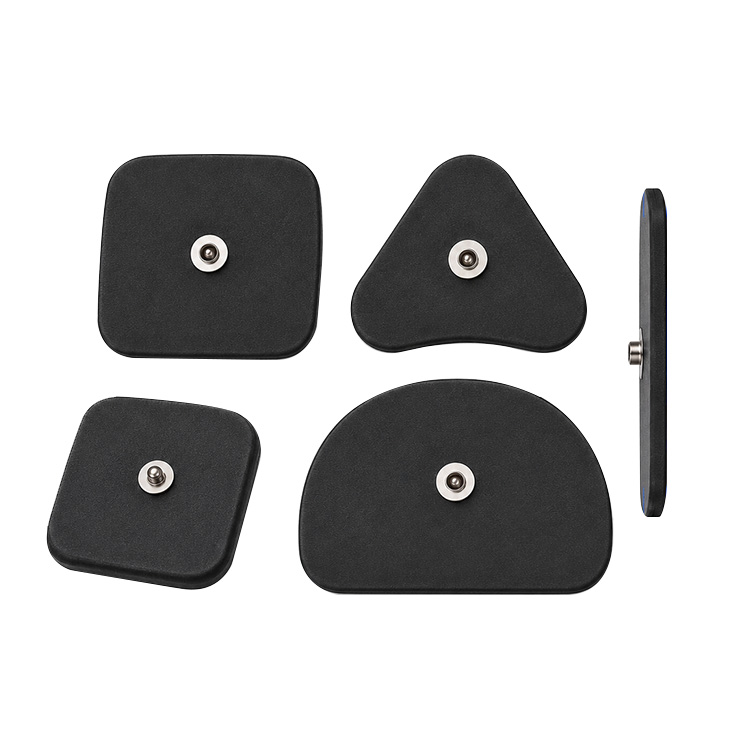
Choosing suitable ECG electrodes requires evaluating backing materials, conductive gel, signal stability, and equipment compatibility. Healthcare buyers should select products based on clinical applications, monitoring duration, and patient comfort rather than purchase price alone.
ECG electrode backing materials affect adhesion, flexibility, and skin comfort. Foam backings can provide moisture resistance, while cloth and non-woven materials offer flexibility and breathability. High-adhesion designs may be suitable for active patients, while gentler adhesives may be preferred for sensitive skin or extended monitoring.
For related electrode material technologies, explore our Non-woven Electrode Pads. Product suitability for diagnostic ECG applications requires separate verification.
Conductive gels establish electrical contact between the skin and the ECG sensing element. Wet gels commonly support rapid signal acquisition, while solid hydrogels offer a cohesive conductive interface with potentially cleaner handling. Actual performance depends on the electrode formulation, adhesive design, and intended wear duration.
Gel Type | Main Characteristics | Typical Applications |
|---|---|---|
Wet Gel | Rapid conductive contact | Resting ECG, stress testing |
Solid Hydrogel | Cohesive gel interface | Routine and extended monitoring |
Silver/Silver Chloride (Ag/AgCl) is widely used in disposable ECG electrodes due to its stable electrochemical properties. Buyers should evaluate electrode impedance, noise, DC offset, and recovery characteristics using relevant product test reports.
For medical-device material development, our Conductive Silicone Electrodes provide examples of alternative conductive interfaces. These products should not be considered interchangeable with diagnostic Ag/AgCl ECG electrodes without appropriate validation.
ECG electrode compatibility depends on connector type, lead-wire design, and monitoring equipment. Snap connectors are common in continuous monitoring, while tab-style electrodes are frequently used for resting ECG examinations. Procurement teams should confirm device specifications and connector compatibility before bulk purchasing.
Disposable ECG electrode performance can be affected by storage conditions, skin preparation, material selection, and handling procedures. Identifying these factors helps reduce signal interference, premature detachment, and unnecessary product waste.
ECG electrode shelf life depends on conductive gel stability, adhesive formulation, and packaging integrity. Healthcare facilities should follow manufacturer storage instructions, monitor expiration dates, and use a first-expire, first-out (FEFO) inventory system to reduce waste.
Proper ECG electrode skin preparation helps improve adhesion and signal quality. Before applying electrodes, healthcare professionals should assess the skin, remove excess moisture, and address excessive hair when necessary. Additional cleaning or gentle skin preparation should follow the electrode manufacturer's instructions and clinical protocols, particularly for sensitive or fragile skin.
Common Problem | Possible Cause | Recommended Action |
|---|---|---|
Wandering Baseline | Movement or unstable skin contact | Check positioning and adhesion |
Electrical Interference | Poor connections or electrical noise | Inspect lead wires and connections |
Electrode Detachment | Perspiration or unsuitable adhesive | Select an appropriate electrode design |
Skin Irritation | Adhesive sensitivity or prolonged contact | Assess the skin and use suitable materials |
Unstable Signal | Gel deterioration or damaged electrode | Replace with a suitable fresh electrode |
ECG electrode procurement should balance inventory efficiency with clinical requirements. Standardizing compatible electrode designs can simplify purchasing and staff training, while specialized products may still be necessary for pediatric patients, sensitive skin, stress testing, or extended monitoring.
Audit your facility's highest-volume procedures to identify the primary backing and gel requirements for your core inventory.
Request clinical sample packs from manufacturers to conduct hands-on adhesion and skin-tear evaluations with your nursing staff.
Review the AC impedance specifications on manufacturer data sheets to ensure optimal signal clarity for your specific monitors.
Initiate a 30-day clinical trial in a high-acuity department before signing any long-term bulk procurement contracts.
A: Wet gels provide rapid signal acquisition by quickly penetrating the skin. They are ideal for short-term tests but dry out faster. Solid gels, or hydrogels, take slightly longer to stabilize the baseline but retain moisture for days. They leave less residue and are preferred for long-term monitoring.
A: A standard 12-lead ECG requires exactly 10 electrodes. Clinicians place four on the patient's limbs and six across the chest. The monitor uses these 10 physical data points to calculate and generate 12 distinct electrical views of the heart.
A: Safe wear time depends on the backing and adhesive type. Standard foam sensors typically last 24 hours. Breathable cloth or tape sensors with solid hydrogels can safely remain on the skin for 72 hours to 5 days, provided the skin shows no signs of irritation.
A: Adhesion loss stems from several primary culprits. Patient diaphoresis breaks the adhesive bond. Improper skin preparation, such as failing to clip hair or leaving alcohol wet, prevents initial sticking. Finally, using expired sensors with dried-out gel guarantees poor adhesion.
A: No. Standard sensors use metal snaps that cause bright white artifacts on X-rays and heat up dangerously during MRI scans. Facilities must use specific carbon-based or non-metallic radiotranslucent sensors for patients undergoing radiological imaging.
A: Keep them in their original, sealed foil pouches until immediately needed. Store the boxes in a climate-controlled environment away from direct heat or sunlight. Once a pouch is opened, fold the top over tightly and secure it to prevent ambient air from drying out the gel.


